As an outsider, the solution to the SF housing issues seem pretty simple... Vote out the NIMBY politicians and replace them with people who will change zoning laws to allow for more building. I'd assume almost no one likes the current situation unless they are a landlord.
>> almost no one likes the current situation unless they are a landlord.
Anyone who owns property in the city, whether they are a homeowner or a landlord, likes the current situation. For non-landlord homeowners, the current situation keeps their property values and home equity high and it ensures that the neighborhood and quality of life they bought into stays permanently stuck in time.
My local Nimby group, for e.g., sends out monthly notices (e.g http://pastebin.com/0TJiV0aM ) letting us know where the next development is, why we should protest it and sends us sample templates on how to email politicians to protest any new development. While large developers are probably able to lobby politicians, I doubt they're able to do this kind of astroturfing.
It is bad enough that the recent monster home epidemic is consuming every inch of a lot up to its maximum permissible limit to build supersized single-family homes. This legislation, in effect, enables the trend for a monster-home-plus-in-law at the cost of further eroding our mid-block open space that is a community resource providing residents with light, air, privacy, visual relief, and a much-needed psychological comfort zone.
I've never actually seen words like these penned, in favor of NIMBYism. SF is experiencing a "monster home epidemic"??? This is legitimately disgusting.
I don't know that it's an "epidemic", but houses are certainly getting bigger in the US[1]. I can see why a block filled with yards/gardens and small buildings is preferable to a block filled with large buildings and not much else. This just seems like a newsletter for people who care about things like that enough to participate in their local government. I doubt I'd personally agree with many of their stances, but I really can't see how it's "legitimately disgusting".
This just seems like a newsletter for people who care about things like that enough to participate in their local government.
For other cities/locales you may be right, but in SF, it just seems offensive. We all know what the consensus epidemic is in the Bay Area, and attempting to use that word to imply that these poor landowners are being encroached upon is something I find reprehensible. Their "epidemic" is a trifling concern compared to what some are going through.
I can see why a block filled with yards/gardens and small buildings is preferable to a block filled with large buildings and not much else.
There are plenty of places in the country where you can find that. When very wealthy people stubbornly want to hold onto that in the middle of one of the most dense metro areas in the country, while people are being pushed out of their homes and homeless fill the streets, yeah I find it disgusting for them to talk about preserving their "much-needed psychological comfort zone." They can move out to the country if they really want all that stuff, they can afford it, not everyone can.
>> I can see why a block filled with yards/gardens and small buildings is preferable to a block filled with large buildings and not much else.
Preferable to whom, though? Look at it from the perspective of one of those people who are renting in SF, and can barely afford that rent given your paycheck (or cannot afford it, actually, if you had to pay market value). I bet they would prefer a residence they can afford to the one they cannot.
So long as freedom of movement and freedom to buy and sell property are in place, it's either-or - either a given block will be affordable, or it will have yards/gardens and small buildings. The latter carries an implied statement that people below a certain income level simply shouldn't be there. I think it's clear why some would find it "legitimately disgusting".
Astroturfing is when they send out of a bunch of professional advocacy designed to look "grassroots" in the sense of "just ordinary people who care about the issue".
I don't see how "a legit neighborhood group asking residents to contact their officials" fits that model; why do you say it's astroturfing?
I thought the key ingredient of astroturfing is the concealment of the source of the message. The idea is to make a centralized effort appear to not be centralized. I would say that providing templates to contact public officials would qualify as astroturfing. And yes, I would extend that attribution to many advocacy groups whose proposals I agree with.
It may seem similar enough, but that does not seem to match the standard usage[1], in which the critical ingredient is the false impression of pre-existing grassroots consensus.
Telling the existing John/Jane Q. Public, who already agrees with you on the issue, to actually do something based on that agreement, is just regular activism and doesn't connote the "aha! caught you" aura of an astroturfing allegation.
A lot of people who do not own (i.e., renters) in SF also do not want high rises. They feel like SF would have a long way to go before all of the foreign money runs out and those apartments would become affordable to them. In short, they don't think more building will benefit them in terms of housing, but will instead be bad for them in terms of quality of life, e.g., more people and traffic, etc.
High rises are one thing but they are not the way to solve SF's housing shortage. One 5-story building on one corner of every block in the sunset would easily relieve the shortage.
Geographically speaking most of SF already suffers from poor quality of life. Except for the northeast quadrant of the city, SF is dominated by flat, boring, ugly zones of car-centered banality.
The problem with building mid sized apartments everywhere, is that now you have to be involved in political fights everywhere.
With high rise buildings, all you need to do is convince ONE place to build a bunch of them. Perhaps in a place such as south SOMA, which is packed with industrial warehouses that could be replaced with apartment sky scrapers.
Nobody is going to be gentrified when the old dirty warehouses in south SOMA get replaced.
> Nobody is going to be gentrified when the old dirty warehouses in south SOMA get replaced.
FWIW, the city thinks that warehouses and auto body shops are an important part of its jobs plan for non-techies. Apparently it pays better than working in the service industry.
Agreed. I hate how people keep casually mentioning that "oh, you could just build up n% of the low-rise areas", as if convincing all those neighborhoods to go along with it and replacing all those buildings were somehow easier -- politically or otherwise -- than 20 SoMa/FiDi high-rises.
Ideally the political solution would be only a single step that allows property owners to build x-story buildings in certain zones. That shouldn't require the persuasion of every single neighborhood, because "neighborhood" shouldn't be a political unit with the ability to stop a property owner from building a structure that is permitted by the larger government's (i.e. the city's) zoning laws.
Yes, it is a suburb inside of a city. And the inhabitants of that area of The City like it that way. The people who live in the Sunset and Richmond form very powerful political blocks, and you're going to have to do a lot to unseat their representatives on the Board of Supervisors.
Actually, Katy Tang, the Supervisor from the Sunset, is a major proponent of building more. Unlike many of the other Supervisors, Katy Tang is actually looking out for the good of the local economy.
Now, Eric Mar, the Supervisor from the Richmond. This is a man I detest.
Maybe start-ups can convince their employees to move to the Sunset with the singular goal of voting in a pro-growth person to the Board of Supervisors. You can do this one district at a time.
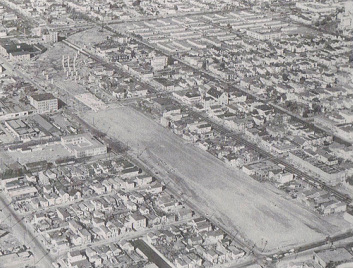
In the Midwest, if someone built that photo (exactly) it would get called a strong downtown urban design, and the builder would be praised for creating "missing middle" housing.
Well I heard there's a couple of nice towns in the midwest, like Chicago :-) Even in the most reactionary fringes of the midwest people are starting to realize that exurban sprawl isn't working. See for example http://newsok.com/article/5505468
Chicago is the best city in Michigan, Ohio, Indiana, and Wisconsin. They have nothing to compare. I'd live there except the lack of mountains, lack of an ocean (surfing doesn't work on the Great Lakes even though they're beautiful), and freezing winters + hot humid Summer's would kill me. I can't go back to that. West coast; best coast.
Right, the notion that there is no room in SF is a complete lie. The Sunset and the Richmond could be completely razed to the ground and rebuilt at mid-rise density.
"In the Richmond District neighborhood in San Francisco, CA, residents most commonly identify their ethnicity or ancestry as Asian (50.0%). There are also a number of people of German ancestry (10.9%), and residents who report Irish roots (6.9%), and some of the residents are also of Italian ancestry (4.5%), along with some Russian ancestry residents (4.1%), among others. In addition, 35.2% of the residents of this neighborhood were born in another country."
You're right about that. In light of history I was using "white" to mean "not black". Over the decade we haven't seen any problem in displacing black people by the thousands to build even things that weren't worth having, like the Cypress freeway and the Western Addition.
Those homes have yards, porches, and trees in the back (check the overhead view), and often rooms on the same floor as the garage (which is one car wide). This set-up is clearly not ideal but it's more efficient than the large unused front lawns present in most US suburbs.
It's also how they do it in Montreal and parts of Europe. Check out "Avenue de Chateaubriand, Montréal, Québec H2S 2N8, Canada" . They even have alleys for pairing and the bins so those don't have to sit out on the street (there is also street parking in some areas).
A 45-story building is much more expensive than 9 5-story buildings and causes localized transportation problems. You really want your housing, jobs, education, retail, and leisure spread around such that people can conduct most or all of their daily affairs on foot.
>A 45-story building is much more expensive than 9 5-story buildings
Including land costs, is that really true? I sort of doubt it, since those sorts of high rises are built in cities where land prices aren't that high.
> You really want your housing, jobs, education, retail, and leisure spread around such that people can conduct most or all of their daily affairs on foot.
Don't you want the opposite of that? If it is spread, you spend more time traveling. Public transit that is spread out is very hard to accomplish. Cities with that stuff all spread out are car cities.
If things are spread out and randomly distributed then you have a living economy reachable by foot. There will be a bakery, a barber, a library, and a cafe in your neighborhood. If you put all the houses in one place and all the bakeries in another, then you have to get in your car or on the bus to travel between them.
I always trot out Paris, but that's only because it's such a good example.
There are examples of that working and there are examples of shorter heights working equally well. I enjoy them both (Manhattan and Paris as examples of the two types) but what SF is doing doesn't really work for me. All the high rise residences are being built in a small area south of Market, but in the same neighborhoods there's nothing to do, nothing to eat, no public spaces. It's not very livable.
Nightlife I'll grant you. But I bet if you moved into the new apartments on Beale and Folsom you'd take an Uber everywhere, because there's nowhere to eat lunch on a Saturday within half a mile, and the nightlife is 1.5+ miles away.
That part in the middle of South Beach is a weird little restaurant desert. However if you are willing to make the 10 minute walk I'd recommend the Delancey Street Restaurant for a nice place for brunch with a good social mission. I had many a mimosa there when living in the corporate housing across the street.
High-rise buildings really aren't necessary for a walkable lifestyle. 5-6 stories (Berlin style) and everything you need is within a couple of blocks. Even with UK style terraced streets usually mean you have shops/cafes/pubs within easy walking distance.
I actually think it would be very hard to soak up demand at this point.
I think adding high rise is the right choice, as long as it is accompanied with increases in transport links. It's all very well to add in a couple of thousand people, but they all have to get in and out and buy groceries etc. you don't want each of those people owning a car and making the traffic worse.
I think there should be mor emphasis on making other parts of the Bay Area more like the things people want from the city / peninsular proper. Whether that is transport, cultural or liveability, it should all be possible.
>as long as it is accompanied with increases in transport links
That point so often seems ignored in these discussions (with respect to many growing/popular cities).
So an example of the reality in the Boston area is that the Green Line extension is on hold last I read because costs have doubled to $2 billion or so. (And the Green Line is basically the oldest and crappiest line in the overall not-bad Boston metro system. It's essentially a trolley with underground sections dating to the turn of the last century.)
So 20 years and $20 billion or so in transportation infrastructure would certainly set San Francisco up to do more building in areas where there are good opportunities to expand housing stock beyond what's already being built.
> In short, they don't think more building will benefit them in terms of housing, but will instead be bad for them in terms of quality of life
The frustrating thing about this NIMBY argument, is that it's usually presented as the progressive option, it's standing up for the people. But in reality it's often selfish - homeowners/landlords who have a lot to gain are gaining support for their cause, by getting the disenfranchised to basically decide "If I'm going to be priced out of the city anyway, I'm gonna take as many other people as I can out with me". When in reality, many of them would have a shot at not getting priced out at all with better policy (or at least a shot at making "getting priced out" not so bad, e.g. more housing supply in the city & in neighboring towns -> prices drop a little in the city -> prices drop a lot outside of the city within easy commuting distance).
How do you square the narrative "units in these high rises would be bought out by investors and so no one would get to rent them" with "these high rises would attract too many people and too much traffic to the neighborhood"
+1. If the problem is that absent foreign investors are buying up all the housing stock, maybe we should make a 100 story tower on some parking lot in SOMA and sell each floor as a $5M luxurious penthouse unit with the stipulation that the buyer must reside out of the country. Boom, we just took a bunch of those foreign investors out of the market without increasing traffic and decreased the annual US trade deficit by 1% to boot.
Fundamentally, if people outside the country want to buy our housing, we should be happy about that, and create jobs by building housing to meet the demand. Imagine if our reaction to Chinese demand for Buicks was to limit car manufacturing and complain that foreign investors are making Buicks unaffordable.
"with the stipulation that the buyer must reside out of the country."
If we could prevent them from getting a visa to come at all, we could do the same thing and we wouldn't even have to build the building. Just allocate a few address numbers on ritzy street corners and sell the "buildings" to investors stashing Russian or Chinese black market cash.
Of course it's an absurd analogy, there would not be much value if there is no underlying property you can make use of. But I think it illustrates the point well: if the high prices were caused by absent foreign investors, 101 would not be jammed.
More realistically, investors rent out the properties they buy. So a market with tons of foreign investors spending irrationally would have an undersupply of homes to buy and corresponding oversupply of homes for rent. Renters would get a great deal and buyers would get bad ROI.
You could actually do that. If you sold options in an approved development with a five years delay in start time, you'd probably get in plenty of cash and not actually have any new residents. You could get a healthy market going in just the right to own an apartment in the future.
I think the answer to this is the city should do all the land acquisition/architecture/engineering/environmental impact research/planning approval, and then offer that completed package for developers to bid on. This will make it much easier for developers to build projects as they'll not have to worry about paying these up-front costs only to have the city reject their proposals, while still allowing voters to ensure truly terrible projects aren't built. Surely there must be downsides to this approach, what are they?
Not to say I'm in favour of NIMBYism, but if SF had to have a serious, rustbelt scale economic downturn in the future then lack of overdevelopment would be a positive thing.
The problem is that "NIMBY politicians" are elected by NIMBY residents. If you are a homeowner, or live in a rent controlled apartment, SF is a fantastic place and there is little incentive to get rid of zoning laws. To fundamentally change the rental market in SF, you need to craft an argument that convinces these voters to change their minds. The "hey, lets get rid of zoning laws so we can build tons of apartments so more people can live here" argument may make sense if you don't live in SF, but if you are already living there, and vote in SF elections, in many cases, it's not going to be very convincing.
I think the best argument for building more is to keep SF weird. A lot of people are sad SF has changed so radically; become less artsy. These same people argue against building up, in the misguided notion that it will destroy their lovely city. But imo what's destroying SF is not high rises but anyone on a sub $100k salary has to live somewhere else. It's becoming a mono culture. And at the end of the day bitching about all the tech people isn't going to solve the problem because you can't tell people where they can and can not live.
Well eventually it's going to have a real problem if service workers can't afford to live there. What are they going to do, pay maids and janitors $30/hour to entice them to commute 4 hours a day?
There's lots of places where the real estate values are very high, and poorer people are completely priced out of the area. Those places don't have a problem with that, because districts where lower-income people can live aren't all that far away, so it's not that big a deal for service workers to commute so they can work in or near there (as maids, housekeepers etc. for the rich people, or at the local businesses like restaurants located conveniently to those rich people).
The problem in SF is that it's geographically bound, and all the surrounding areas also have very high real estate values, so service workers who don't live in one of the rent-controlled places have to commute from very far away.
I think eventually, this is going to be a self-correcting problem if the NIMBYs prevent any new development. Pretty soon, it's going to suck living in SF because you won't be able to go out to eat there, you won't be able to buy any groceries there, you won't be able to hire a housekeeper there, etc. It'll be like living way out in the country, but you'll be surrounded by neighbors.
Personally, I think they should probably outlaw rent control (it'd probably have to be done at the state level). That's probably enabling SF to maintain itself this way, by giving lower-income people a place to live nearby. Eliminate rent control and those rents will go through the roof, pricing them all out of the city. Then the landowning residents can suffer without any services.
Why wouldn't they just move somewhere else if they're not rich enough to stay there? SF isn't the only city in the Bay Area, after all; it's surrounded by many other cities.
My whole idea is to make it so service workers don't want to live in SF or work there either, causing services to either just not be available, or to cost an absolute fortune, seriously degrading the quality-of-life for SF residents. If you make it so service workers just can't live there (without resorting to illegal overcrowded occupation like you mention here), I think they'd just go elsewhere.
Even if you find a new job and an affordable place to live -- not that easy to do -- you're going to have to pay a lot of out of pocket expenses (i.e. rental deposit, moving/packing expenses), which is really tough when 47% of American's are so cash strapped they can't afford to pay for a $400 emergency. [0]
It also has a high social and emotional strain. You'd be leaving all your family, friends, and cultural identify you've built up in a city. Plus if you're in a relationship or have a family, your partner would need to find work too, and your children would have to leave school/their social circles.
It's a really disruptive life change, and though sometimes it can help improve someone's financial situation, it's a tough thing to expect of thousands of people. I can't blame them if choose to keep struggling to get by in their hometown.
>Personally, I think they should probably outlaw rent control (it'd probably have to be done at the state level). That's probably enabling SF to maintain itself this way, by giving lower-income people a place to live nearby. Eliminate rent control and those rents will go through the roof, pricing them all out of the city. Then the landowning residents can suffer without any services.
Ah, the FULL ACCELERATIONISM option. Just beat down the working classes until they revolt!
I'm not trying to get the working classes to revolt, I'm trying to get them to abandon that place and go work somewhere else. If SF is so expensive that working classes simply can't live there or live close enough to commute, then what happens to the city? How does the city manage when it can't find anyone willing to clean the streets, take out the trash, etc.? Or what if they have to pay people outrageous wages to do that to entice them to work there? If a local convenience store needs to pay people $60/hour to work there, that's going to result in some high prices. If a local restaurant needs to pay the cooks and waiters $60/hour, a meal there is going to be quite pricey. If the police and teachers need to be paid $200k, taxes are going to have to go way up to pay for that, and those taxes are all paid by the residents. Many people might not want to move there when they find out the property tax has now been set at 300% (because all the existing property owners are grandfathered to a much lower rate). What'll that do to the realty prices and rents?
The problem is that people who make less than dis figures live there too and probably wouldn't like that very much. The people who do make six or seven figures and live there also wouldn't like that too much. Plenty of tech people are involved in the rent control activism stuff.
Yes, it'd cause a lot of short-term pain for the poorer people who are currently benefiting from rent control. However, the way I see it, the rent control is enabling this bad behavior, and eliminating it would force things to change for the better. The 6-7-figure earners living there voting for NIMBYism are the ones causing this problem, and the only way it's going to change is to either convince them to stop voting that way (because they get tired of never eating out because there's no restaurants nearby or having to spend $500 on a meal to eat at a local eatery), or to collapse the real estate market there (because no one wants to live there any more with such lousy services).
Chicago and Manhattan have lots of high-rises and are not monocultures. Portland is super weird (they take pride in it) and has some high-rises. Why would none of those models work?
From what I can see, there is an immense demand from software developers to move to SF, and the non-techies I engage with have already expressed frustration and exhaustion with the overpowering startup culture in the city.
San Francisco is the second-densest large city in the United States (after NYC). It is denser than the Tokyo Metropolis (which, note, is not the Tokyo Metropolitan Area, which is less dense yet).
(NYC density: 10,831 people/km^2. SF density: 7,152 people/km^2. Tokyo density: 6,200 people/km^2)
Adding enough additional units to the city to make major changes to its affordability is not just a quick change to zoning laws. It's not just that there are height restrictions. If you made a quick change to height restrictions, you'd still find high density projects are expensive to build and prone to being blocked by the various other obstacles to building that a high-regulation city like SF has. And also, creating and funding big building projects takes time -- and there's a lot of pent-up demand for SF.
AND, if you did add tens of thousands of new dwelling units in SF in the traditionally less-dense areas of the city, you'd totally overwhelm the already struggling transport infrastructure of the city in those areas (and I have no idea about other infrastructure. Could the sewers handle this?).
Should we still lower the restrictions on infill development in SF? Yes. The restrictions are well past the reasonable. Will that in a short period of time make a major change to the affordability of the city? Not unless you hand-wave away the entire reality of SF.
Population density in "Tokyo" is much higher than you describe at 15k/km2 on average with many wards of 300-500k persons that are OVER 20k/km2. The Tokyo Metropolis includes Yokohama which is 30km away (it's like including all of Marin/San Mateo/Oakland), while the Met Area you describe would be like the whole Bay Area down to San Jose and halfway to Sacramento.
https://en.wikipedia.org/wiki/Special_wards_of_Tokyo
Seoul, HK, Beijing are similar and I think India has much higher densities still. Population densities in many parts of the world are much higher than SF. I could take a picture out of my window right now of a block of ~200x30story apartment blocks right next to each other standing like soldiers. It's not rare.
Do I want that for SF? No, but the density isn't that extreme... unless you're talking about total $ borrowing power of the individuals involved.
Tokyo's built-up area has population density near 150 (in persons/hectare, the SI unit of population density). It's nearly the same in the central wards and in the outer suburbs. Tokyo achieves that density with almost no one living in buildings over five stories high and the vast majority in free-standing single family homes under four stories.
San Francisco County, not including any suburbs, averages around 90, excluding big open spaces like the Presidio. The Bay Area is closer to 30, just in built-up areas, not including parks and open space.
Manhattan is about 500 and Paris 300.
Gp, of course, has fallen into the trap of including open space in his calculations. Most metro statistical aggregates include a lot of surrounding farmland, ocean, and parks and don't reflect density experienced by residents or development intensity on available land.
I agree... most of Tokyo is only ~3 stories high and it has quite a few parks... there are wards as dense as Manhattan, but only of a few 100k, and it has truly spectacular subways, like Paris, and Manhattan.
There are portions of Shanghai, Beijing, Seoul, HK, Shenzhen that are at incredible densities. Having 6 neighboring blocks of 20-30 30+ story apt buildings isn't rare. I don't now how many people live per floor, but 15-30 seems very reasonable (they aren't empty). Each block has it's own schools and police/fire supporting 10k people in an area the size of a city block with Malls on the lower floors. Those neighboring blocks (still much less than 1km sq) are close to 100k/km2!?
Yes, there seem to be a common misconception that it's density as such that matters. Successful big cities are not based on density, but the fact that they go on and on (making some areas very dense indeed), while San Francisco quite quickly becomes suburbs. Everyone always comes dragig with examples of cities that developed over decades. A more apt, but still unlikely, comparison would be something like Vancouver. Personally I think that the ship sailed when the tech companies built campuses instead of towers.
But in fact the financial district is not all of NYC. And there are plenty of places in SF that have higher than its overall average of 7,100/km^2.
The point is, the meme in HN is that San Francisco is some weird spread out suburb like, I don't know, Houston (1,414 people/km^2). It's not. It's already quite dense. Could it be denser? Obviously yes. Could it QUICKLY become SO MUCH denser that it radically changes the affordability of the city? Only in the fairy land where you ignore every part of reality that's inconvenient.
Regardless of what the density numbers show (which I suspect depends much more on what we choose to define as "the city" than on any reality), anecdotally it's impossible to get around comfortably in SF without a car.
Being able to live without a car is the defining characteristic of a real city as opposed to a sprawled-out suburb, in my mind.
I do know people who live in SF without owning a car but they use a lot of Uber/Zipcar/other rentals/car sharing etc. (as well as cycling and using delivery services). Personally, in their position, I'd probably own a car.
That said, there are very few US cities where you could live without a car without it being a hassle, especially if you want to leave your core urban area on a regular basis.
I'm less convinced that world class city inherently means "not owning a car is the norm and isn't really a compromise." That seems to give a lot of weight to what's ultimately your personal preference.
But, yes, if that's the definition, only New York (Manhattan in particular) really qualifies in the US. You can get away with it in other US cities but it tends to depend on stage in life, income, specific situation with respect to job etc., recreational activities, and how much hassle you're willing to put up with.
That said, living in Manhattan is a very specific lifestyle choice that isn't for everyone. I like visiting it now and then but the summer I worked there was enough.
Can you name many other world-class cities where one needs a car to comfortably survive? I've been to many such as Hong Kong, Tokyo, Paris, and London, and most people don't own cars in any of those.
Re: HK, not sure if this is cause or effect but the taxis there are much more plentiful and much cheaper than the US. The current conversion looks to be 10HKD = $1.29 USD. A 3-mile cab ride in HK is 60HKD, or about $7.74 ( http://www.numbeo.com/taxi-fare/city_result.jsp?country=Hong... )
If we scale that to a 10-mile trip, assuming no waiting or traffic, which with SF is $33/hr extra, and in HK it's no charge (just by mileage) IIRC (having them wait is ~$12.38/hr):
SF: ~$31.05
HK: 150HKD=$19.35
This combined with their seriously great subway system ( https://en.m.wikipedia.org/wiki/MTR ) make it very practical to not own a car. You take the subway for short and medium trips, and hop in a cab at the end to get out to a relative's house in the middle of nowhere.
In much of Asia generally, income disparity is such that middle class-ish people can and do hire staff for a lot of things that they couldn't do to the same degree in the US or Western Europe. Thus things like taxis are cheaper.
And Hong Kong is relatively expensive. My experience in southeast Asia is that, in some places, you can hire a car and driver for the day for maybe $50 or so. So--combined with how horrible driving in the big cities there are--many people just have drivers.
Cities in general could be much denser. Those 7k people/km could be 27k people.
We know this because there are currently places that are 27k.
Those place in NYC that are 10k could ALSO be much more dense if the NIMBY didn't stop them from being so.
And yes, it could be done quickly. Just stop preventing developers from development. The market would LOVE to make tons of money by massively expanding.
I just moved myself, wife, and toddler out of Cole Valley to Seattle. We had to leave because - you guessed it - cost of living. My position is head of engineering for a small SaaS company. I make a _very_ healthy living by any standard yet couldn't afford to stay in SF with a family. It's bitter sweet; the bay area is absolutely amazing. But Seattle is a very close second and we're happy we can afford a comfortable life here.
Now my point -
We became members of the the Cole Valley neighborhood association and the only involvement my wife and I had was reading the monthly newsletter. The newsletter's tone and NIMBYism was astounding! Laughably-so that it was a constant source of jokes and conversation. My wife and me kept returning to how, for she and I, that perspective was shortsighted; we believe that attitude actively works against protecting the very thing that makes the city great - diversity in arts, culture, and food & beverage. If NIMBYism truly prevailed this would all go away to a homogenous super-elite. ... but maybe that's the goal. :(
Seriously. From what I read here on HN, SF is pretty messed up. So, if someone doesn't want to live somewhere messed up, don't go there to begin with. One can't move near an airport and complain about the noise.
> From what I read here on HN, SF is pretty messed up.
You probably shouldn't base your impression of SF entirely on the negative articles you read on HN. SF has some serious issues, but it also has a lot going for it. Namely, the job opportunities if you're in tech are great. The weather is great. Lots of the area is beautiful. It's a liberal area (great if that fits your views), including being LGBT-friendly. It's got some great culture if you're in tech.
The biggest problem with SF seems to be housing affordability, and that's frankly not a huge problem for 6-figure earners (not the way it is for the real middle class), despite all the self-pity. 6-figure earners in the bay can afford housing, even if they can't afford what they want to own.
> So, if someone doesn't want to live somewhere messed up, don't go there to begin with.
This isn't helpful for the nearly million people who already live in SF or the millions who live in the surrounding areas.
Honestly, I find the culture of Silicon Valley's tech industry to be utterly degenerate. Even if the area was affordable, I wouldn't live or work there in large part because SV puts me off.
I work in tech, I'm LGBT myself (multiple letters of LGBT at that), and the Dallas area is pretty much everything I want in a city.
I honestly don't get why the Bay Area doesn't just expand outward. Sure, you can't go farther west because there's an ocean in the way, but what's stopping it from sprawling north, south, and east? I'm from Dallas, which has experienced booming growth for as far back as I can remember, and we've kept housing prices down without sacrificing suburban culture by simply expanding outwards. Nobody cares that none of the expansion is in Dallas proper; the locals here see each suburb as neighborhoods, not separate cities (albeit, neighborhoods with their own street signage and lane markings, but still). Not just housing; workplaces are moving outwards too. Hell, right now, I live in the burbs, and my workplace is in a suburb that's even farther away from Downtown from where I live.
> Honestly, I find the culture of Silicon Valley's tech industry to be utterly degenerate.
I'm not sure what that means. I was mostly referring to the fact that there are a ton of techies there. If you want to strike up a conversation about microservices with a stranger on the street, SF is probably the easiest place to do so.
> I honestly don't get why the Bay Area doesn't just expand outward.
Traffic, probably. It takes about 30 minutes to commute from Oakland to SF, and those two are pretty close geographically. Your commute could be far longer depending on where you live and work in the existing Bay Area. I doubt most people want to commute an hour from San Ramon to SF.
Plus there are mountains not far east of the Bay. I'm not sure how much of that land is easily developed.
Yes; traffic. Anywhere within an hour to two hour commute to SF or SJ or the peninsula carries a huge premium, and it's not like we can just hop on a train to the city. The yellow line reaches the furthest into the east bay, and all the places along it range from "pretty expensive" to "rich people area". The blue line to Pleasanton...well, it's called "Pleasanton", what do you think it is? Lots of rich people live there and the "downtown" is one street. They complained a lot about BART even running out there ("we don't want that inner city crime coming out this way!"), and BART doesn't run to SJ (not even close; even though that was in the original plans: http://io9.gizmodo.com/5866928/a-map-of-san-franciscos-subwa... ).
IMO if we had proper mass transit, it'd alleviate many of the real-estate problems we see now. All the low density and NIMBYism makes that a pipe dream, for now and the foreseeable future.
I think the question is why San Francisco doesn't expand like, say, New York has? Where each new neighborhood becomes somewhat self sustaining. I seem like there would be a queue of people that wants to start a company in the cheaper part of town. I guess maybe SV is that cheaper part though.
Is each new neighborhood of NYC really self-sustaining? It seems NYC's ability to grow is based on massive amounts of people being able to easily and cheaply commute to Manhattan daily.
It has. You don't have to go into SF for anything if you live in Mountain View, or Oakland, or Sunnyvale, or any of the other towns in the bay area. But as you noted, those aren't cheap either.
You don't have to unless you want things like nightlife, good food, cultural events, etc. It's true that you can survive in the peninsula without those things, and every bar around is not dead, but it's not the city and not even close.
I lived in Mountain View and ate plenty of good food without ever going into SF. I wasn't much into nightlife, but there were bars there and in the neighboring towns. I don't know what cultural events you're referring to so it's hard to answer that. Probably fewer parades if that's what you're interested in.
And no, it's not the same as SF, but that's really a far different question than whether the surrounding towns are self-sustaining. If you want to live in a truly urban area, then MV and Sunnyvale will not be for you. If you want a place that you can work and live, then they can. It's unfair to pretend they have no food, bars, or culture.
The Bay Area already has sprawled north, south, and east. I have coworkers who commute from all those directions. It's hit the limit of the current transit infrastructure, and adding more is cost and time prohibitive.
I was there a couple of times last year. Mostly seemed like any other large city, except it's too low-rise to make sense. Actually not a pretty place, a lot of boring buildings. (Landmarks are different.)
The thing that really stood out to me, however, was that there seems to be a lack of psychiatric care. Almost every day I was there I would run into some guy who was having an argument with an imaginary person. Often a very aggressive argument. Cops even came by once. Not something I often see in Europe, and I've lived in 5 cities in 3 countries now.
The US does not handle it's population of people with mental illness very well. A large percentage of the US homeless population have mental illness and cities with good weather have a much higher number of homeless people.
SF has a lot of homeless people because it has relatively good services for the homeless compared to other places in the US, and the weather is tolerable. If you're mentally ill and homeless, SF is a better option than most.
You should see what the people are doing over at Laguna Seca, you bought your house next to a race track and you're complaining about the sound? Completely baffling.
Sure, SF is merely masquerading as a world class city, by the people that live in the area. It has no grip on its elementary problems that actual world class cities have developed solutions for.
But you can have a good time there. Nobody will actually know if you live in an apartment and have startups give you free food everyday, or if you live in a tent under the highway.
Now if you are trying to earn enough to make a downpayment for a place in San Francisco.... thats not in the cards.
What makes a world-class city? I'd say great architecture, great culture, high-quality museums, good schools, great universities, excellent hospitals. And people who care about each other. San Francisco has all of those.
Wealthy voters secretly like the situation but pay lip-service to economic inequality concerns because they know nothing major can come of it. Poor voters are voting for the red herring of rent control while being slowly gentrified out of town.
That's a fairly harsh interpretation. A slightly different interpretation with the same result is that wealthy individuals benefit, and enjoy the benefits current system while understanding that it's broken and unfair. It doesn't have to be lip-service.
The current system screws over newcomers in favor of longtime residents. Rent control and Prop 13 mean that if you've been living in SF for a couple of decades, you're paying bargain-basement prices for either rent or property tax.
Asking people to vote against their interests doesn't work very well.
If they're long-time residents, they're paying $800 a month for that exact same $4k/mo apartment.
You're basically asking the long-time residents to vote for measures that will detract from the San Francisco-ness of SF and won't benefit them at all. This is why the NIMBY groups are so powerful.
The only way that you're going to beat them is by getting enough newcomers who can overpower said NIMBY folks in municipal elections. That's going to take a long time to happen.
Your theory here is that there is a one-way relationship between supply and demand, but that's not the case. Increasing supply pushed down on prices, but that can increase demand, sustaining high prices.
That's especially important during a boom (or bubble, depending on your view). With the rise in prices, many companies are finally looking at putting offices elsewhere, or allowing more remote work. Building more housing would have only dropped prices if the pace of building outstripped the tech sector's ability to create jobs, which is prodigious. At a recent SF CTO conference, a number of speakers talked up non-SF options, something I wasn't hearing 5-10 years ago.
As to who likes the status quo, you ignore that "more building" here mostly means "tear down existing buildings and build bigger ones". That is a gain for the people moving in to the eventual new units. But it's a clear loss for the people forced to move, and a disruption of existing communities.
I have yet to meet a SF "build more" advocate so committed that they tore down their own home and replaced it more units.
"As an outsider, the solution to the SF housing issues seem pretty simple... Vote out the NIMBY politicians and replace them with people who will change zoning laws to allow for more building."
You are correct - that is the solution.
However, voting for the opposite is also the solution and is an equally valid expression, and result, of democracy.
I seriously doubt it is that simple. We have lows and policies at both the federal and state level that impact the price of housing. They have a different impact on both individuals and on housing in cities versus smaller towns or rural areas.
Trying to "correct" for what federal and state laws and policies do the housing situation in a specific location is quite burdensome. In order to fix some of what goes on in San Francisco, you would need to figure out the impact of those federal and state laws and policies and see if, realistically, anything can be done to counter them at the local level or if you would need to fight them at the state and/or federal level to have any hope of resolving the situation.
Just because the problem is obvious in San Francisco and significantly impacting the locals does not remotely mean it originates there and can be solved there.
As an insider (resident), that's the "solution" if you only look at 1 variable in this huge equation.
I think we should ask why people still want to live here when it costs so much. Yes jobs are part of it. But the other fact is that 30 story apartment complexes have negative externalities. Unique, historical victorians are part of what makes this city special (and parks), and if we let them be replaced with apartment complexes it'd destroy a piece of this city's appeal.
Umm, the NIMBY politician is being voted in by NIMBY voters. It's not just landlords, it's any homeowner. It's the people looking to move to SF or upgrade within SF. Do you have another idea?